
Animal Crossing Island’s “You Don’t Wanna Stay” Turns a Simple Refrain Into Uneasy Indie Rock
Published
Some songs explain themselves. “You Don’t Wanna Stay” by Animal Crossing Island works differently, building its tension from a short refrain and a handful of details that never fully settle into a complete story.
Released February 27, 2026 on Ringtone Records, the Alternative / Indie Rock single is written and produced by Brice Salek, who is also featured on the recording. At 60 BPM, the song moves slowly enough for its small lyrical details to register without forcing them toward a dramatic conclusion.
At the center is a refrain that keeps returning:
you don’t wanna stay when you’re in the way you don’t wanna stay you don’t wanna change
The words suggest a relationship that has reached the point where staying no longer feels natural, but the song is less interested in staging a breakup than in the thoughts surrounding it. The narrator seems to be turning over the reasons, the responsibility and the distance that has developed between two people.
Listen first for the refrain, then follow what happens between each return. The chorus stays almost exactly the same, but the verses keep changing what those words seem to carry.
A man stands where the sidewalk bends with his hands in his pockets, telling himself he is “not the cause,” then immediately complicating that thought by describing himself as “just another body breaking laws.” It is a small contradiction, but an important one. He may want a clear answer for why things have gone wrong, yet he does not sound completely certain that the blame belongs somewhere else.
Later, a radio talks while they sleep about a “dirty night” on a “borrowed street,” and the narrator hopes she “drifts far away.” The relationship is still present in the scene, but emotionally it already feels like something that has started slipping away.
Those details never become a conventional plot, and that is part of the song’s character. It feels more like catching pieces of someone thinking through what happened after the central decision has already started forming.
The middle of the song is worth hearing closely because the interest is not in a big change of direction. It is in the way the same refrain becomes heavier as the narrator keeps considering the different reasons someone might no longer want to stay.
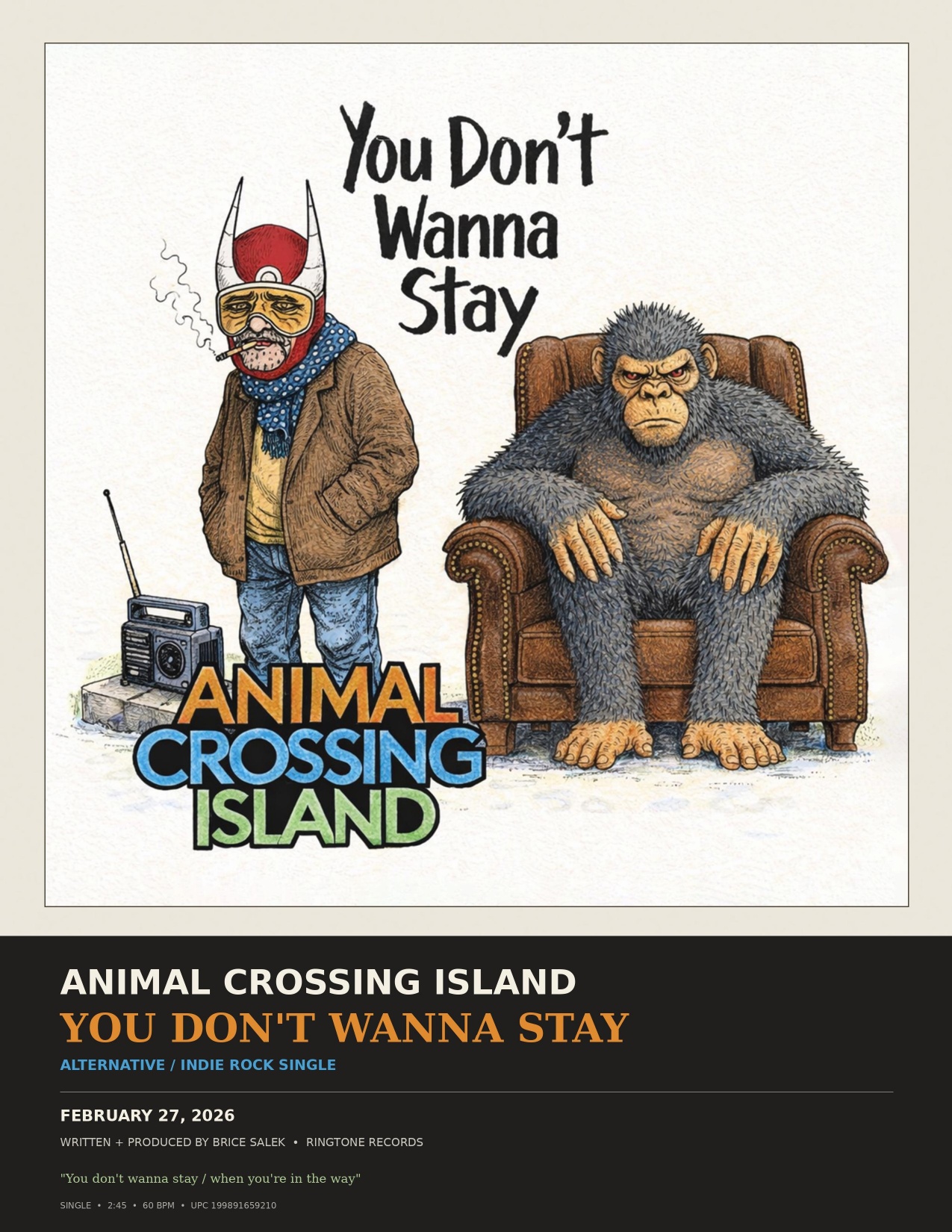
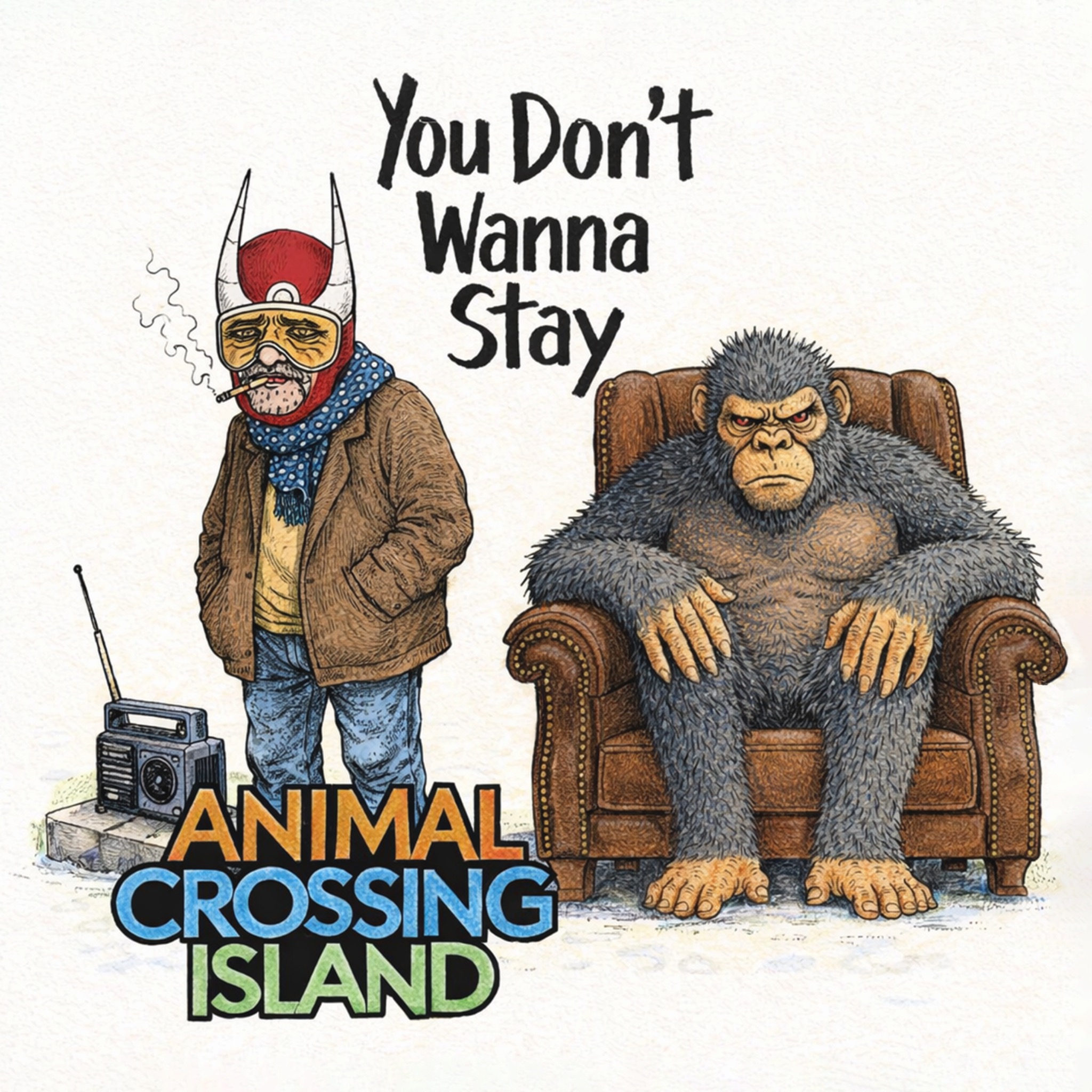
The artwork follows the same instinct. A bundled figure stands beside an old radio while a large ape sits heavily in an armchair. There is humor in the image, but also discomfort, distance and the feeling of two figures occupying the same space without much connection left between them.
That combination of repetition, restraint and slightly surreal imagery suits Animal Crossing Island well. The project works best when a clear human feeling is allowed to sit inside something a little stranger, without every detail being explained away.
By the final chorus, “you don’t wanna stay” sounds less like a question than an acknowledgment. The song still leaves room around the reasons, but the emotional direction has become clear enough.
Put it on from the beginning and stay through the final refrain. The song does not solve the relationship or explain every cause. It simply lets the narrator arrive at the point where leaving has become easier to understand than staying.